Nuclear waste recycling gains momentum as US atomic energy revival accelerates
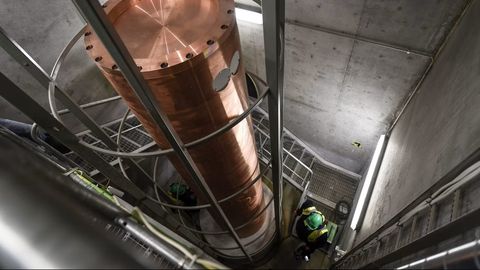
As support for nuclear energy grows in the United States, the focus is shifting from storing radioactive waste for millennia to finding ways to reuse it. The debate over what to do with nuclear waste has persisted for decades, but new momentum behind atomic power is driving fresh interest in recycling solutions.
TehnoloogiaFor decades, the United States has been locked in a seemingly endless debate about what to do with radioactive waste generated by nuclear power plants. Now, as nuclear energy is enjoying a dramatic resurgence in political and industrial support, researchers and policymakers are increasingly asking a different question: what if that waste could be put back to work?
A decades-old problem, a new urgency
The Wall Street Journal reports that the renewed enthusiasm for nuclear power has breathed new life into efforts to recycle spent nuclear fuel rather than simply bury it deep underground for thousands of years. The old approach — finding a permanent geological repository and sealing waste away — has faced enormous political and technical obstacles in the US, most notably the long-stalled Yucca Mountain project in Nevada.
Now, with data centres, artificial intelligence infrastructure, and decarbonisation goals all driving demand for reliable, carbon-free electricity, nuclear energy is being reconsidered at the highest levels of government and industry. That renewed interest has created an opening for advocates of nuclear waste reprocessing, who argue that spent fuel still contains enormous amounts of usable energy.
Squeezing more out of spent fuel
The concept of reprocessing nuclear waste is not new — France has done it commercially for decades, and countries like Japan and Russia have invested heavily in closed fuel cycles. In such systems, plutonium and other fissile materials are extracted from spent fuel and fabricated into new reactor fuel, dramatically reducing the volume and longevity of the remaining waste.
In the US, reprocessing has been politically sensitive since the 1970s due to proliferation concerns, but shifting energy priorities appear to be loosening those constraints. If the current wave of nuclear optimism translates into policy action, the way America handles its growing stockpile of radioactive waste could be fundamentally transformed in the coming years.
Ava rakenduses →