Neuroscientists: Freud's Theories of Consciousness May Be Grounded in Reality
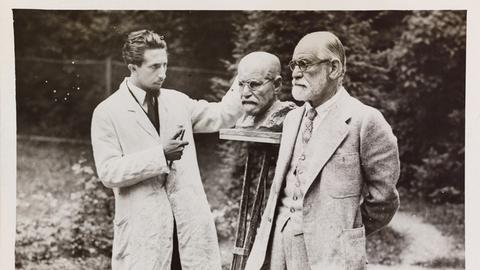
A new study finds surprising parallels between Sigmund Freud's psychoanalytic theories and the contemporary neuroscience model of predictive processing. According to researchers, these connections may help us better understand human behaviour and the development of mental disorders. Ideas formulated a century ago prove unexpectedly relevant in today's neuroscience.
TehnoloogiaSigmund Freud's psychoanalytic theories have been regarded for decades as philosophy rather than science, but a new study casts doubt on this assessment. Some neuroscientists now find that the internal processes described by Freud contain surprising similarities to the contemporary model of predictive processing, which has become one of the central paradigms in neuroscience in recent years.
The Brain as a Prediction Machine
According to predictive processing theory, the brain does not respond passively to external stimuli, but constantly attempts to predict the future—creating models of what should happen next. When reality does not match expectations, a so-called prediction error occurs, which the brain tries to minimize. According to the authors of the new study, this process is remarkably similar to how Freud described the dynamic tension between consciousness, the unconscious, and desires.
Parallels emerge particularly in how both models treat hidden motives and internal conflicts. Freud argued that many of our actions and emotions are driven by unconscious factors that consciousness does not directly perceive. Contemporary neuroscience speaks in similar terms of a brain that does much of its work hidden—outside the scope of conscious attention.
Implications for Mental Health
According to researchers, these parallels may have practical significance in understanding and treating mental health. If psychoanalytic concepts can be connected with neuroscientific mechanisms, this could open new possibilities for studying mental disorders—such as anxiety, depression, and trauma. Such a bridge between the two traditions would allow clinical psychology and neuroscience to be integrated more closely than before.
Critics caution, however, that drawing analogies does not yet mean Freud's theories have been scientifically proven. The parallels are inspiring, but would require more rigorous empirical testing. Nonetheless, the study reflects a broader trend in the scientific world—interest in finding common ground between psychology's classical heritage and contemporary neuroscience.
Ava rakenduses →