MIT researchers revive 1980s invention with a three-way 'Y-zipper' that transforms soft objects into rigid structures
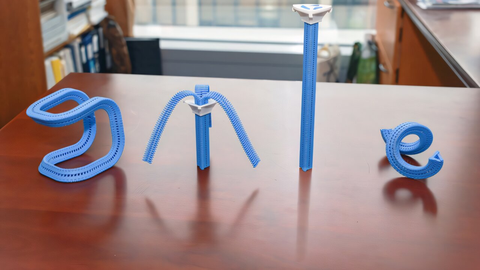
Scientists at MIT have developed a so-called Y-zipper — a three-pronged fastener that can instantly stiffen flexible objects into rigid constructions. The innovation, rooted in an obscure 1980s idea, uses 3D printing and custom software, and could reshape tent assembly, medical supports, and shape-shifting robots.
TehnoloogiaResearchers at the Massachusetts Institute of Technology (MIT) have brought a forgotten invention back to life — and the results could change how everyday objects are designed and manufactured. Their creation, dubbed the "Y-zipper", is a three-part fastening system capable of transforming soft, flexible materials into rigid structures in an instant.
Unlike a conventional zipper that simply opens and closes along a single track, the Y-zipper branches into three interlocking paths. This branching mechanism allows connected fabric or soft material panels to lock together into a fixed three-dimensional shape, and then release again when needed — offering a reversible rigidity that standard zippers cannot provide.
The potential applications span a wide range of fields. MIT researchers suggest the technology could speed up tent assembly in the field, enable medical braces and supports to be quickly adjusted to a patient's body, and power the next generation of soft robots that adapt their shape to uneven terrain. The system is designed to be manufactured using 3D printing and paired with specialised software that lets designers map exactly how an object should bend, move, or lock.
What makes the project particularly striking is its origin story. The core idea traces back to the 1980s, when an engineer first envisioned that a zipper could do far more than fasten a jacket. That concept lay dormant for decades before MIT's team picked it up and turned it into a working, software-driven platform.
The MIT team believes the Y-zipper could open entirely new possibilities in both everyday product design and advanced engineering. As 3D printing becomes more accessible, the barrier to manufacturing custom zipper geometries continues to fall — making it increasingly plausible that this once-overlooked idea could soon find its way into tents, hospitals, and robotics labs around the world.
Ava rakenduses →