China Investigates Human Reproduction Possibilities on Tiangong Space Station
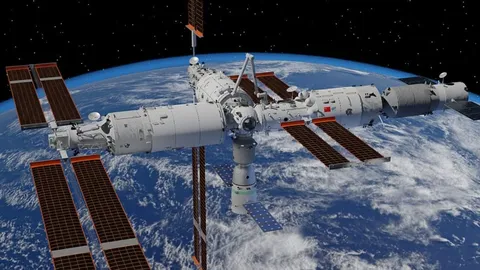
Chinese scientists conducted an experiment at the Tiangong space station examining the development of artificial embryos in microgravity conditions. This is the first experiment of its kind that could determine the feasibility of future colonization of the Moon and Mars. The results could transform understanding of human reproduction beyond Earth.
TehnoloogiaChinese scientists have taken a significant step in investigating the future of space-based civilization: for the first time, an experiment was conducted aboard the Tiangong space station monitoring the development of artificial embryos derived from human stem cells in microgravity conditions. This experiment could provide an answer to the question of whether humans are capable of reproducing in space at all.
Why This Experiment Matters
The effects of microgravity on human cells have interested scientists for decades, yet research related to reproduction has remained in the background. The use of artificial embryos allows scientists to study the earliest stages of cell division and development without the ethical concerns that would accompany sending real embryos into space. The goal of Chinese scientists is to understand whether and how the absence of gravity affects the earliest stages of human development.
The Key Question for Colonization
Lunar and Martian colonization is more than just a technical challenge—for humanity to sustain permanent life on other celestial bodies, it is essential to know whether life can also be reproduced there. If normal embryonic development proves impossible in microgravity, this calls into question the entire concept of long-term space settlement. The data obtained at Tiangong is therefore critically important not only for science, but also for the strategic planning of space research.
China's space programme has made remarkable advances in recent years, and Tiangong has become an internationally significant research platform. The artificial embryo experiment is one sign that China aims to be at the forefront not only of space technology but also space biology.
Ava rakenduses →